
What Home Sellers Should Know About Disclosures in Virginia (2026 Guide)
Selling a home in Virginia comes with plenty of paperwork, deadlines, and legal responsibilities. One of the most important parts of the process is understanding real estate disclosures. Whether you’re selling a townhouse in Northern Virginia, a waterfront property in Virginia Beach, or a family home in Richmond, knowing what you must disclose to buyers can help you avoid legal problems and keep your sale moving smoothly.
Many sellers assume disclosures mean listing every issue they’ve ever had with the property. Fortunately, Virginia disclosure laws work a little differently than in many other states. Virginia is considered a “buyer beware” state, which means buyers are largely responsible for investigating the condition of a property before purchasing it. Still, that doesn’t mean sellers are off the hook entirely.
In this guide, we’ll break down everything Virginia home sellers should know about disclosures, including what you’re legally required to share, what buyers are expected to investigate, and how to protect yourself during the sale process.
What Are Real Estate Disclosures?
A real estate disclosure is information provided by a seller about a property’s condition or legal status before a home sale is finalized. These disclosures help buyers make informed decisions and reduce the risk of disputes after closing.
In many states, sellers must complete detailed forms explaining known defects such as roof leaks, mold issues, plumbing problems, or structural damage. Virginia handles disclosures differently.
Instead of requiring sellers to disclose every known defect, Virginia law relies heavily on the buyer to conduct inspections and research. However, there are still several important disclosures sellers must provide.
Understanding these rules is critical because failure to comply can delay your sale, cause a buyer to back out, or potentially lead to legal action later.
Is Virginia a “Buyer Beware” State?
Yes. Virginia follows the legal principle known as “caveat emptor,” which means “let the buyer beware.”
Under Virginia law, buyers are expected to:
Conduct professional home inspections
Research the property’s condition
Investigate zoning and environmental concerns
Ask questions before purchasing
Unlike some states, Virginia sellers generally do not have to volunteer detailed information about property defects unless specifically required by law.
This often surprises homeowners moving from states with stricter disclosure requirements.
However, being in a buyer-beware state does not mean sellers can intentionally hide major problems or misrepresent the condition of the home. Fraudulent concealment or lying about known issues can still create serious legal liability.
What Is the Virginia Residential Property Disclosure Statement?
When selling residential real estate in Virginia, sellers must provide buyers with a document called the Residential Property Disclosure Statement.
This form is issued by the Virginia Real Estate Board and serves an important purpose: it informs buyers that the seller makes no warranties about many aspects of the property and that buyers should perform their own due diligence.
The disclosure statement typically explains that the seller does not guarantee:
The condition of the property
Nearby land use
Environmental conditions
Whether the property complies with zoning regulations
Whether there are protected historic areas nearby
Other material conditions unless specifically required by law
In simple terms, the form tells buyers:
“You need to do your own homework before buying this property.”
This document must usually be delivered before the buyer signs the purchase agreement.
What Virginia Sellers Must Disclose
Although Virginia sellers are not required to disclose every defect, there are several legally required disclosures that must be provided.
Below are some of the most important disclosures Virginia home sellers should know.
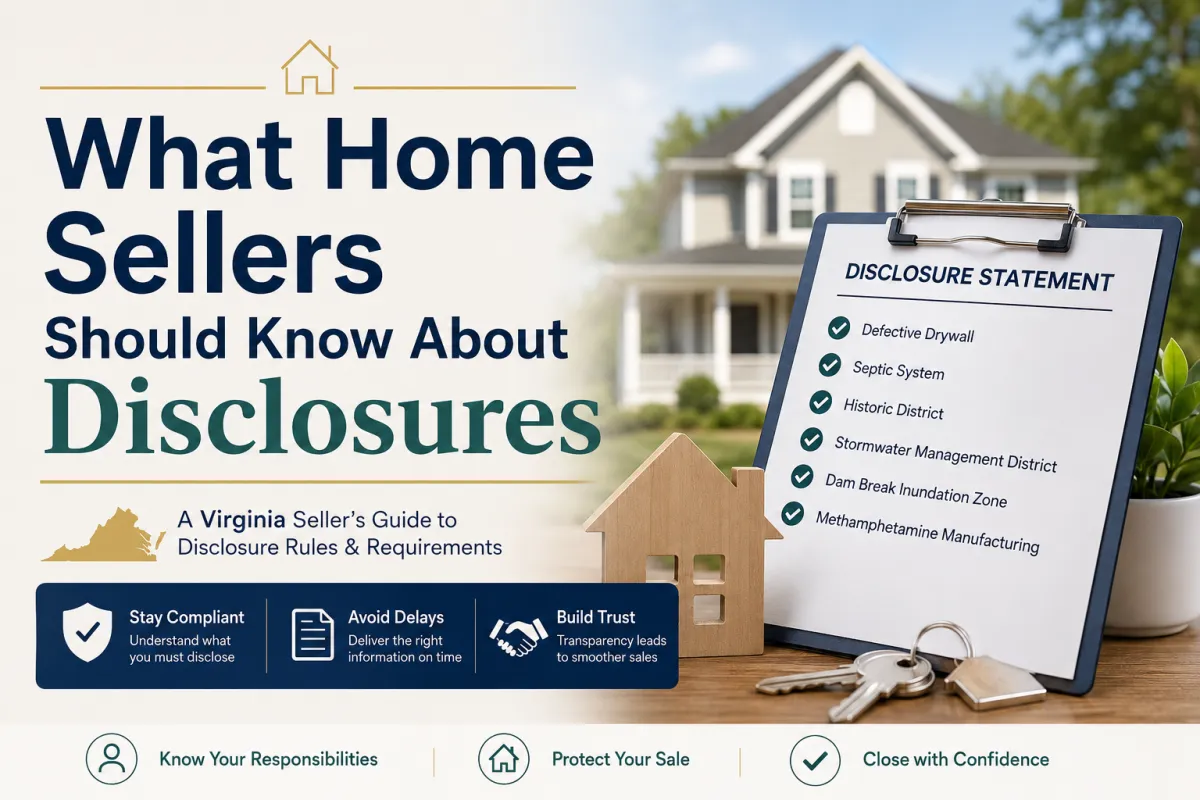
1. Defective Drywall Disclosure
Virginia law requires sellers to disclose if they are aware of defective drywall in the property.
This typically refers to imported drywall linked to corrosion issues and indoor air quality problems that became common in homes built during the mid-2000s housing boom.
If defective drywall is known to exist, sellers must disclose it to potential buyers.
2. Septic System Disclosure
If the property is served by a septic system, sellers may need to disclose information related to the system’s operation and maintenance.
This is especially important in rural areas of Virginia where homes may not be connected to public sewer systems.
Buyers often want to know:
Age of the septic system
Inspection history
Pumping records
Known issues or repairs
Even though Virginia is buyer beware, transparency here can help prevent problems later.
3. Methamphetamine Manufacturing Disclosure
Yes, this is a real requirement.
Virginia law requires disclosure if the property was previously used to manufacture methamphetamine and has not been properly remediated.
Chemical contamination from meth production can create serious health risks, so this disclosure is taken very seriously.
4. Historic District Disclosure
If the property is located within a designated historic district, sellers must disclose this fact.
Historic district regulations can affect:
Exterior renovations
Additions
Paint colors
Window replacements
Demolition permissions
Buyers should understand these restrictions before purchasing the home.
5. Stormwater Management District Disclosure
Virginia sellers may also need to disclose whether the property is located within a stormwater management district.
This matters because homeowners in these districts may face additional maintenance responsibilities or fees.
6. Dam Break Inundation Zone Disclosure
Some Virginia properties are located in designated dam break inundation zones.
This means the property could potentially be affected if a nearby dam fails.
If applicable, this disclosure must be provided to buyers.
7. Military Air Installation Disclosure
Certain Virginia properties located near military air installations may require disclosures regarding noise zones or accident potential zones.
This is especially relevant in areas near:
Norfolk
Virginia Beach
Hampton Roads
Other military-heavy regions
What Sellers Do NOT Have to Disclose in Virginia
One reason many homeowners appreciate Virginia’s disclosure laws is because sellers are not generally required to disclose every known issue.
In many cases, sellers are not legally obligated to disclose:
Minor cosmetic defects
Previous repairs
Neighbor disputes
Paranormal activity or stigmas
Deaths on the property (unless specifically asked in certain situations)
However, sellers still cannot intentionally conceal defects or provide false information if directly questioned.
For example:
Covering water damage with fresh paint to hide mold could create liability.
Lying about a leaking roof if asked directly may also create legal exposure.
Honesty is still the safest strategy.
Why Disclosure Timing Matters
One of the most overlooked parts of the disclosure process is timing.
Virginia disclosure forms should be delivered before the buyer signs the purchase agreement. If the disclosure is delivered late, the buyer may have the legal right to cancel the contract within a certain timeframe.
That means a simple paperwork mistake could cost you the sale.
Working with an experienced Virginia real estate agent can help ensure deadlines are met correctly.
What Happens If a Seller Fails to Disclose?
Failing to provide required disclosures can lead to serious consequences.
Potential issues include:
Buyers backing out of the contract
Delays in closing
Legal disputes after closing
Financial damages
Lawsuits for fraud or misrepresentation
Even in a buyer-beware state, courts do not look favorably on intentional deception.
If a seller knowingly hides a major issue and the buyer later discovers it, the seller could still face liability.
Should Sellers Voluntarily Disclose More Information?
In many cases, yes.
Although Virginia law may not require extensive disclosures, voluntarily sharing certain information can actually benefit sellers.
Being transparent can:
Build trust with buyers
Reduce negotiation issues
Prevent surprises during inspections
Lower the risk of post-closing disputes
Help transactions move faster
For example, if you repaired a roof leak several years ago and have documentation showing it was professionally fixed, sharing that information upfront may reassure buyers rather than scare them away.
How Buyers Protect Themselves in Virginia
Since Virginia is buyer beware, buyers are expected to perform thorough inspections and research before purchasing.
Common buyer protections include:
Home Inspections
Professional inspections evaluate:
Roofing
HVAC systems
Plumbing
Electrical systems
Foundation issues
Water damage
Radon Testing
Certain parts of Virginia are more prone to elevated radon levels.
Pest Inspections
Termite and wood-destroying insect inspections are common in Virginia real estate transactions.
Septic and Well Inspections
Rural properties often require additional evaluations.
HOA Document Reviews
If the home is in a homeowners association, buyers should review:
Rules and restrictions
Fees
Pending assessments
Financial health of the HOA
Tips for Virginia Home Sellers
If you’re preparing to sell your home, here are some practical steps to make the disclosure process easier.
1. Review the Disclosure Statement Carefully
Do not rush through the paperwork.
Read every section carefully and ask your real estate agent if you are unsure about any requirement.
2. Be Honest
Transparency is almost always the safest approach.
Trying to hide issues often creates larger problems later.
3. Gather Repair Documentation
Keep records for:
Roof replacements
HVAC servicing
Plumbing repairs
Renovations
Foundation work
Having organized records can help reassure buyers.
4. Consider a Pre-Listing Inspection
Some sellers choose to complete a home inspection before listing the property.
This can help identify issues early and reduce surprises during negotiations.
5. Work With a Local Real Estate Professional
Virginia disclosure laws can be confusing, especially for first-time sellers.
An experienced local real estate agent can help ensure:
Proper paperwork is completed
Deadlines are met
Required disclosures are delivered correctly
Legal risks are minimized
Frequently Asked Questions About Virginia Seller Disclosures
Do sellers have to disclose mold in Virginia?
Virginia does not require broad disclosure of all defects, but sellers cannot intentionally conceal known problems or lie if directly asked.
Can a buyer sue after closing in Virginia?
Yes. Buyers may pursue legal action if they believe a seller committed fraud, misrepresentation, or intentionally concealed material defects.
Is Virginia a full disclosure state?
No. Virginia is considered a buyer-beware state, meaning buyers are responsible for investigating the property’s condition.
Are home inspections required in Virginia?
No, but they are highly recommended for buyers and extremely common in real estate transactions.
Do sellers need to disclose previous water damage?
Virginia law may not require disclosure of all past issues, but hiding active or known material defects could create liability.
Final Thoughts on Selling a Home in Virginia
Selling a home in Virginia involves more than simply putting a “For Sale” sign in the yard. Understanding your disclosure responsibilities is an important part of protecting yourself and keeping your transaction on track.
While Virginia’s buyer-beware laws place much of the responsibility on buyers, sellers still have legal obligations they must follow. Providing the required Residential Property Disclosure Statement, disclosing legally mandated issues, and being honest throughout the process can help you avoid unnecessary complications.
The best approach is simple: be proactive, stay organized, and work with experienced real estate professionals who understand Virginia real estate law.
At Aloha My Home, we believe informed sellers make smarter decisions. Whether you’re preparing to list your first home or your fifth, our goal is to make the process easier, clearer, and less stressful from start to finish.
If you’re thinking about selling your home in Virginia and want expert guidance, reach out to our team today. We’re here to help you navigate every step of the journey with confidence.